“To acquire knowledge, one must study; but to acquire wisdom, one must observe.” — Marilyn vos Savant
For Manisha Thapa, an Engineering Geologist based in Lalitpur, Savant’s quote is reality. With a master’s in Engineering Geology from Tribhuvan University, her professional work focuses on geo-hazard assessment, slope stability analysis, and infrastructure planning. Her core interest lies in linking geology, hydrogeology and climate science, specifically in understanding how rainfall and groundwater movement affect landslides, erosion, and debris flows in the fragile Himalayan terrain.

“As someone actively engaged in geohazard monitoring and risk reduction, I was drawn to the initiative for its role in collecting localized hydrometeorological data, especially important in areas with limited formal monitoring networks.”
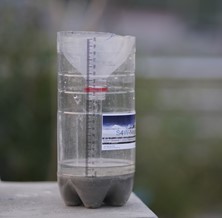
Manisha joined the Monsoon Expedition 2025, committing to daily rainfall monitoring. During some heavy rainfall events in Lalitpur, she observed a linkage between heavy rain, surface runoff, and small slope failures. Through her daily measurements, she noticed that while satellite-based rainfall estimates provide a broad overview of rainfall patterns, they often miss local details such as how rainwater seeps into the ground and how soil saturation affects slope stability. Her ground-based observations highlight the importance of local rainfall monitoring for a better understanding of rainfall-related hazards.
“This experience signifies the importance of ground-based data in capturing site-specific hydrological and geological dynamics.”
She is motivated by the knowledge that her data can contribute to building hydrogeological models, supporting climate resilience, sustainable water resource management, and infrastructure planning in hazard-prone regions. Her engagement in a citizen science approach also sharpened her own technical perspective as a geologist.

“The S4W-Nepal platform enabled me to bridge the gap between community-level data collection and scientific analysis, highlighting the critical role of citizen science in improving disaster preparedness and supporting adaptive strategies in geohazard-prone environments.“
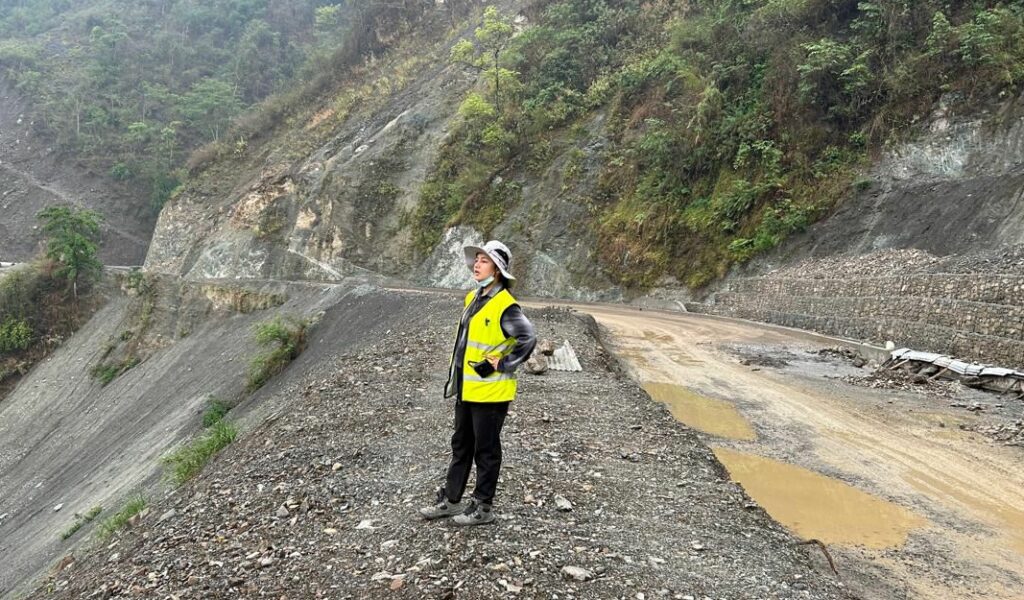
In her message to her fellow citizen scientists and the S4W-Nepal team, she stated that consistent, simple measurements can have significant scientific and societal impact. She highly encourages students, professionals, and local communities to participate in citizen science. By bridging community engagement with scientific research, we can make better data-driven decisions and build safer, more resilient communities across Nepal. We are grateful for her contributions and look forward to seeing her continue her journey as a citizen scientist.